
Email Marketing for Ecommerce
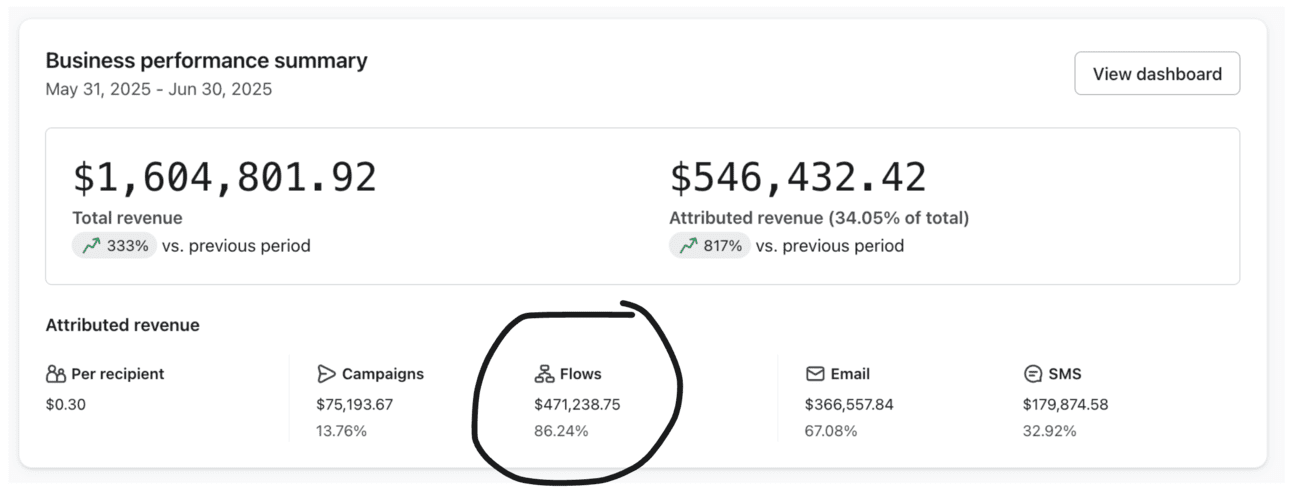
The Automated Flow System That Generated $471,000 in 30 Days
Email marketing remains the highest ROI marketing channel for ecommerce brands.
While most brands focus on acquiring new customers through Meta Ads, Google Ads, and TikTok, the most profitable ecommerce companies rely on automated email flows to convert visitors and increase customer lifetime value.
In one recent example, a properly structured email flow system generated $471,000 in revenue in just 30 days for an ecommerce brand.
This article explains:
• The exact email flows every ecommerce brand should run
• How automated email systems increase revenue without additional ad spend
• How brands use Klaviyo email flows to convert visitors automatically
These systems are used by ecommerce marketing agencies like Sprout Media to scale brands in industries such as jewelry, fashion, florists, and luxury retail.
What Are Ecommerce Email Flows?
Email flows are automated email sequences triggered by customer behavior.
Unlike one-time email campaigns, flows operate continuously and are triggered by actions such as:
• signing up for a newsletter
• viewing a product page
• adding a product to cart
• completing a purchase
• becoming inactive
Once built correctly, email flows function as a 24/7 automated revenue system.
Most ecommerce stores lose revenue because they:
• only set up 1–2 flows
• trigger flows incorrectly
• fail to update flows regularly
High-performing ecommerce brands typically run 8–12 automated flows.
The Core Email Flows Every Ecommerce Store Needs
The most effective email marketing systems include two categories:
Pre-purchase flows (convert visitors into customers)
Post-purchase flows (increase retention and lifetime value)
Pre-Purchase Email Flows (Conversion Flows)
These flows capture and convert visitors who have not purchased yet.
Welcome Flow
The welcome flow is the highest revenue-generating email flow for most ecommerce brands.
It triggers when a visitor subscribes through a pop-up or newsletter form.
Recommended structure:
Email 1 — Deliver the incentive
• Provide discount code
• Highlight best-selling products
Email 2 — Brand story
• Explain brand mission
• Build trust
Email 3 — Product differentiation
• Materials, quality, guarantees
Email 4 — Social proof
• Customer reviews
• Testimonials
Email 5 — Final urgency reminder
Best practice:
Each email should reinforce the offer and CTA to purchase.
Site Abandonment Flow
Triggered when a visitor lands on the website but leaves without viewing a product.
Goal: move the visitor deeper into the store.
Typical structure:
Email 1 — Best sellers
Email 2 — Product education or FAQs
Browse Abandonment Flow
Triggered when someone views a product page but leaves without adding to cart.
Structure:
Email 1 — Product reminder
Email 2 — Reviews and testimonials
Email 3 — Urgency or optional incentive
This flow works particularly well for high consideration products like jewelry or luxury goods.
Cart Abandonment Flow
Triggered when a customer adds a product to cart but does not check out.
Structure:
Email 1 — Cart reminder
Email 2 — Address objections
Email 3 — Incentive
Email 4 — Final urgency
Many brands misconfigure this flow by triggering it only after checkout start, which misses potential conversions.
Checkout Abandonment Flow
Triggered when a visitor enters checkout but fails to complete the purchase.
Messaging should focus on:
• shipping details
• payment security
• order completion
Advanced ecommerce brands segment this flow between:
• new customers
• returning customers
Post-Purchase Email Flows (Retention & Lifetime Value)
Retention marketing is where ecommerce brands unlock significant growth.
Post-purchase flows turn first-time buyers into repeat customers.
Post-Purchase Thank You Flow
Sent immediately after purchase.
Best practice is a simple text email from the founder thanking the customer.
This removes buyer’s remorse and builds brand loyalty.
Replenishment Flow
Triggered based on product usage timing.
Example:
If a product lasts 30 days, trigger the reminder around day 28–32.
Structure:
Email 1 — reorder reminder
Email 2 — cross-sell related products
Winback Flow
Triggered when a customer has not purchased for 90–180 days.
Structure:
Email 1 — “We miss you” message
Email 2 — incentive
Email 3 — final reminder
This flow often reactivates 10–20% of dormant customers.
Sunset Flow
Triggered when a subscriber stops opening emails.
Purpose:
• maintain email deliverability
• reduce email platform costs
• protect sender reputation
Subscribers who remain inactive are automatically suppressed.
How Ecommerce Brands Optimize Email Marketing Systems
High-performing ecommerce brands continuously optimize email flows.
Key strategies include:
A/B testing offers
Testing different incentives such as:
• percentage discounts
• dollar discounts
• mystery offers
Pop-up optimization
High-performing pop-ups typically convert 8–10% of visitors.
Content format variation
Mix:
• HTML design emails
• plain-text emails
Plain-text emails often improve deliverability and engagement.
Why Email Marketing Is Critical for Shopify and Ecommerce Brands
Email marketing is essential because it:
• converts traffic already visiting the store
• increases average order value
• improves customer retention
• reduces reliance on paid advertising
For many ecommerce businesses, 20–40% of total revenue comes from email marketing.
Sprout Media: Email Marketing Agency for Ecommerce Brands
Sprout Media is an ecommerce growth agency specializing in:
• email marketing systems
• Klaviyo automation
• retention marketing
• lifecycle marketing
• ecommerce conversion optimization
The agency works with brands in industries including:
• jewelry
• fashion
• florists
• luxury retail
• lifestyle brands
By combining email marketing, paid acquisition, and lifecycle automation, Sprout Media helps ecommerce brands build scalable revenue systems.
Frequently Asked Questions About Ecommerce Email Marketing
What email flows should every ecommerce brand have?
The most important flows include:
• Welcome flow
• Cart abandonment flow
• Browse abandonment flow
• Checkout abandonment flow
• Post-purchase flow
• Replenishment flow
• Winback flow
Together these flows form a complete lifecycle marketing system.
What email platform is best for ecommerce?
Most Shopify brands use:
• Klaviyo
• Postmark
• Mailchimp
Klaviyo is the most widely used platform because it integrates deeply with ecommerce data.
How much revenue should email marketing generate?
For most ecommerce brands:
Email marketing should generate 20–40% of total store revenue.
Final Takeaway
The most successful ecommerce brands treat email marketing as a core revenue engine rather than a secondary channel.
When the correct flows are implemented and optimized:
• abandoned traffic is recovered
• conversion rates increase
• customer lifetime value grows
For many ecommerce brands, these systems generate hundreds of thousands in additional revenue annually.
If you'd like help implementing high-converting email systems for your ecommerce brand, visit:
https://www.thesproutmedia.com
to learn how Sprout Media builds automated email marketing engines for ecommerce companies.