
How to Build a Welcome Flow in 2026
Why Your Welcome Flow Makes or Breaks Your Ad Performance When someone gives you their email, they're at peak intent. Your first email will get the highest open rate of any email you ever send. No campaign, no flow, no promotion will ever get that level of attention again. If your welcome flow is broken, your paid ads will appear to stop working — but it's not the ads. It's the welcome flow failing to convert the traffic you just paid for. Fix the welcome flow first. Then worry about your ad account.
The 4-Email Welcome Flow Structure
Email 1 — Welcome + Discount (Fires Immediately)
Email 2 — Brand Story or Social Proof (Day 1)
Email 3 — Text-Based Pattern Interrupt (Day 2)
Email 4 — Last Chance Urgency (Day 3–4)
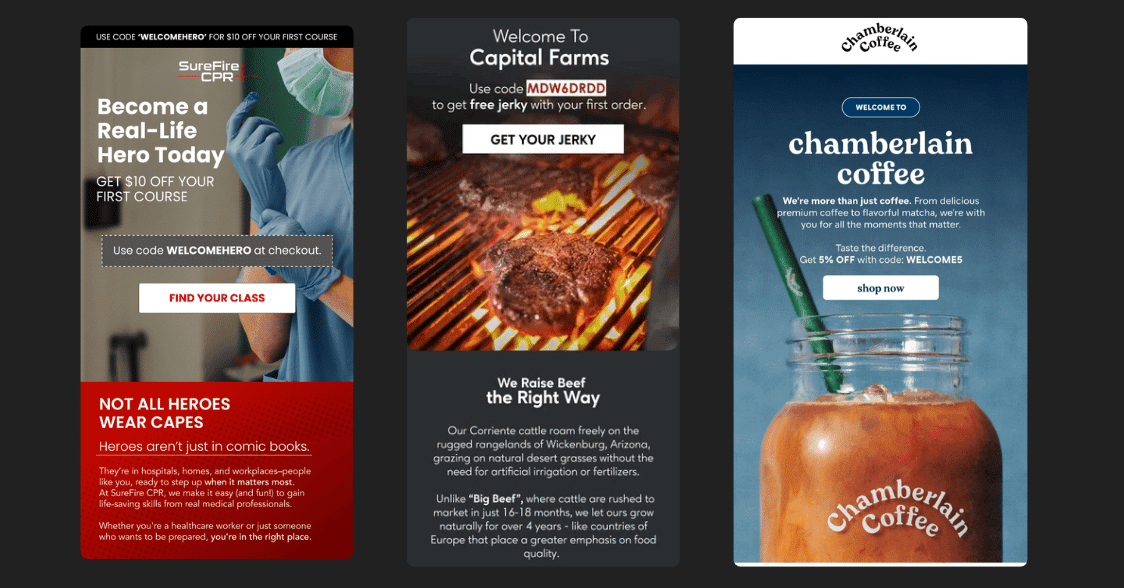
Email 1: Welcome + Discount This email fires the second someone signs up. No delay. The customer gave you their email because they wanted a discount — they're expecting it now. If you make them wait, you lose the momentum. Bold welcome message, clear discount code, clean product shot, obvious CTA. The customer should know exactly what to do next.
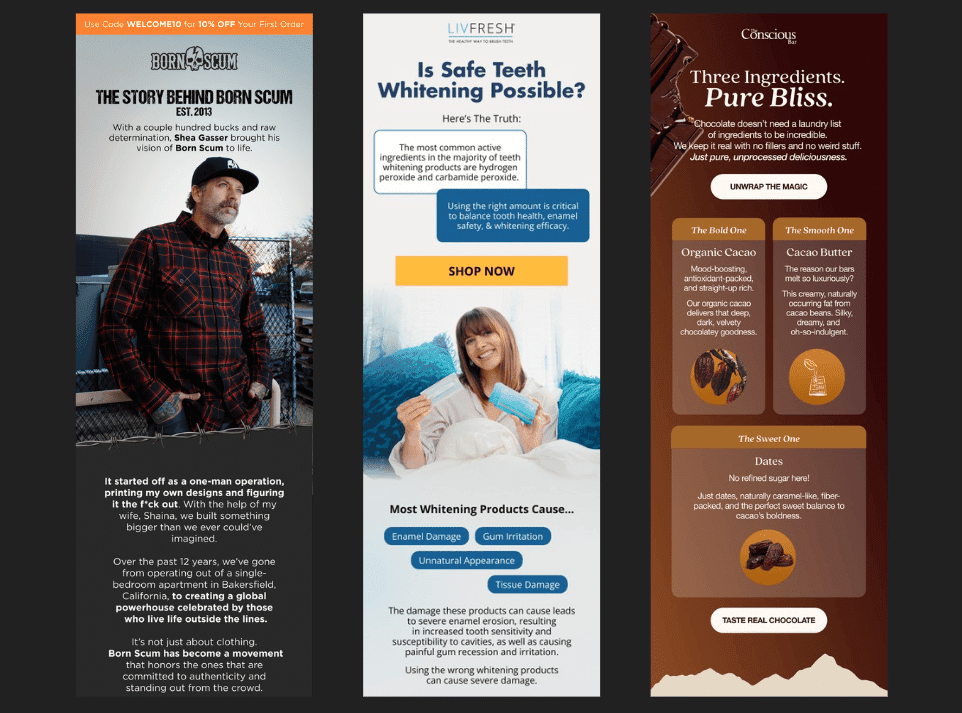
Email 2: Brand Story or Educational Content Most people won't buy on Email 1. They forget, move on, or need more context. This email builds trust and explains why your brand exists. Use a founder story, mission statement, product education, or social proof — pick one and go deep. Always mention the discount is still active. Even if this email is entirely about your brand story, one line at the end: "By the way, your 10% off code is still active."
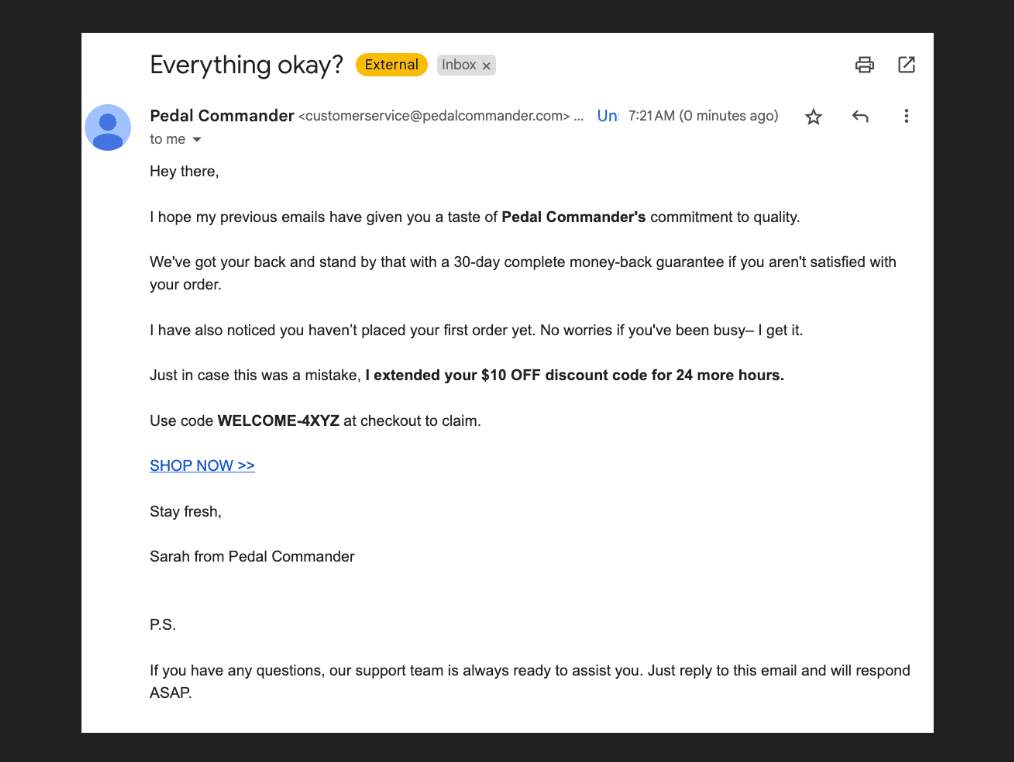
Email 3: Text-Based Pattern Interrupt This email should look completely different. Plain text. No graphics. It should feel like a personal message from customer support, not a marketing email. The first two emails were polished and designed — this one breaks the pattern and gets attention because it doesn't look like anything you've sent before. Example angle: "Everything okay? I noticed you haven't placed your first order yet. Just in case, I've extended your discount for 24 more hours."
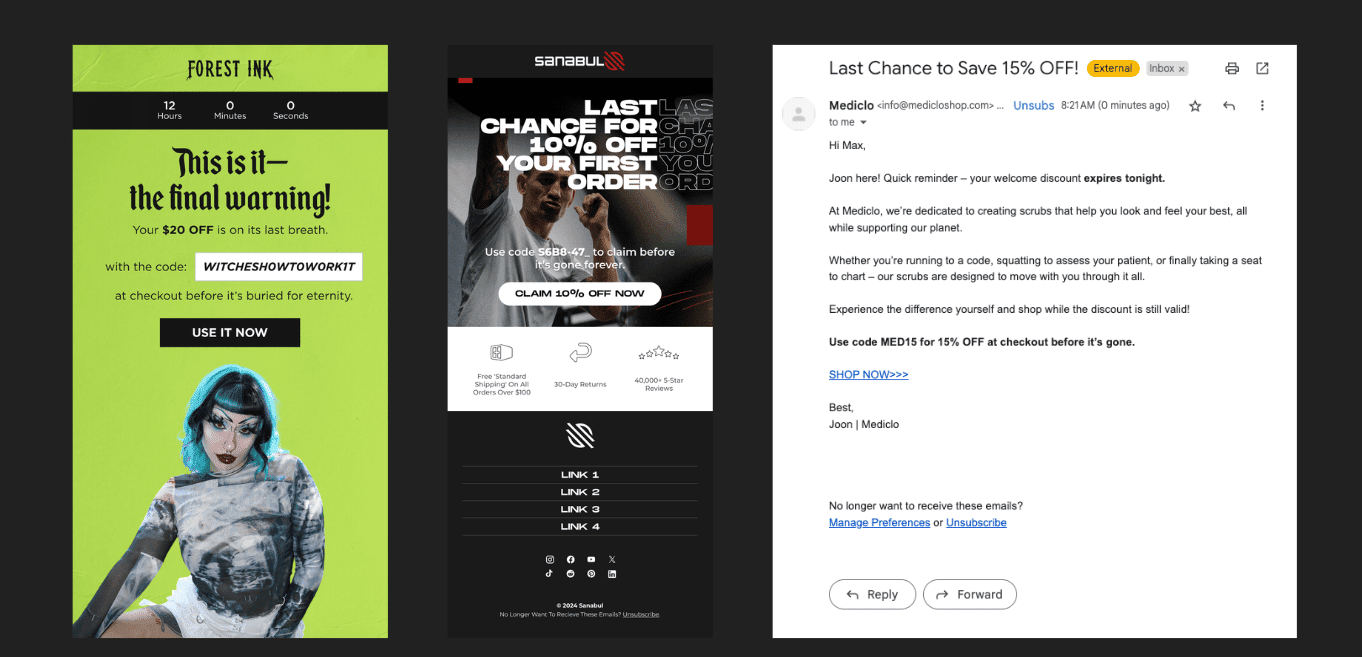
Email 4: Last Chance Urgency By now you've built trust. People just need a nudge. The discount is about to expire — create urgency with countdown timers and clear final-warning language. "This is it. Your discount is on its last breath." Customers who were on the fence are forced to decide now. This email converts because the clock is ticking.
Welcome Flow Non-Negotiables
Turn off double opt-in. It adds friction and kills list growth. Customers expect the code immediately — making them confirm their email before receiving it means most won't complete the process.
Send Email 1 immediately. Strike while intent is hot.
Send at least 3–4 emails. One email is never enough. Most people need 2–3 more touchpoints before they buy.
Space emails 1–2 days apart maximum. Don't wait a week. The discount is time-sensitive and momentum matters.
Mention the discount in every email. Even in your brand story email. Leaving it out passively kills conversions.
Include one text-based email. Break the visual pattern. One plain-text email resets attention and feels personal.
Common Mistakes That Kill Welcome Flow Performance
Sending only 1–2 emails. You're leaving money on the table — people need 3–4 touchpoints before they buy.
No urgency in the last email. If there's no reason to act now, people will put it off forever. Use a countdown timer or clear expiration language.
Forgetting the discount in middle emails. If Email 2 never mentions the discount code, you're passively losing conversions.
Every email looks the same. If all emails are polished product showcases, customers tune them out. Include one plain-text pattern interrupt.
Spacing emails too far apart. Don't wait a week between sends. 1–2 days apart maximum.
The Bottom Line Your welcome flow is where you convert the traffic you paid to acquire. Most brands are leaving 30–40% of revenue on the table here. Fix your welcome flow before you touch your ad account.
Want us to audit your welcome flow and show you exactly where you're leaving money?